
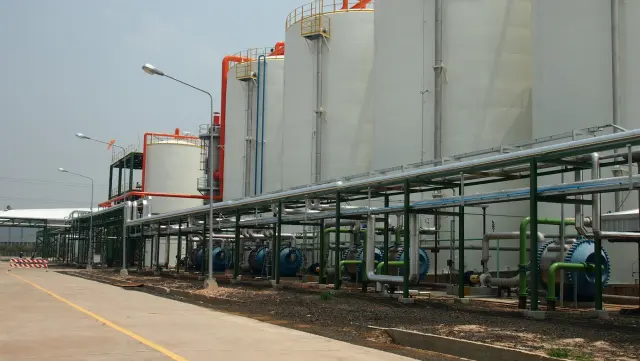
Feed preparation, liquefaction & fermentation
The front end sets the conditions for downstream separation. Our cassava front end integrates storage, milling, liquefaction, saccharification and controlled fermentation.
Explore ↗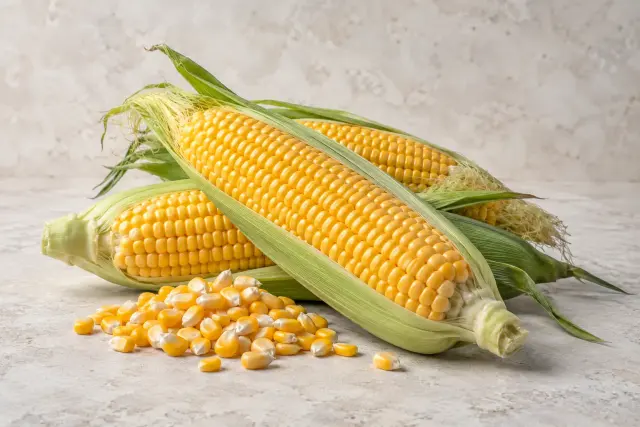
The front end sets the conditions for downstream separation. Our cassava front end integrates storage, milling, liquefaction, saccharification and controlled fermentation.
Explore ↗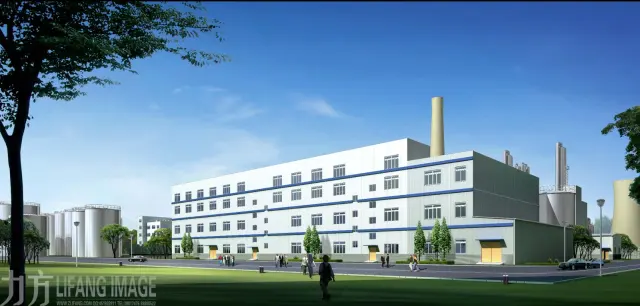
Coordinate solids separation, thin-stillage evaporation, syrup blending and drying around a defined co-product specification. DDGS is a process system, not a general accessory; a molasses stillage route requires a different residue strategy.
Explore ↗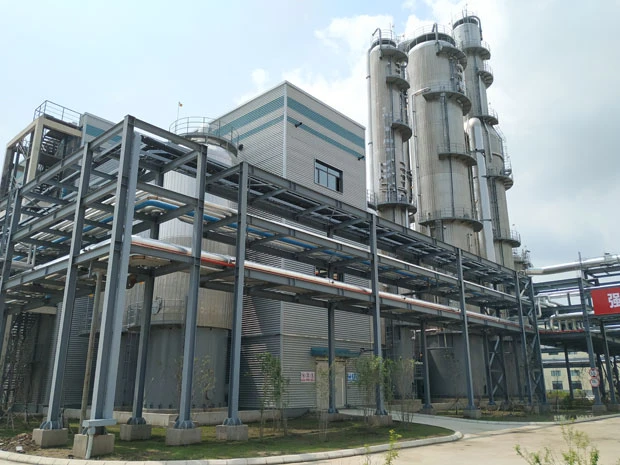
Continuous water removal through alternating adsorption and regeneration. A finishing stage for anhydrous ethanol production.
Explore ↗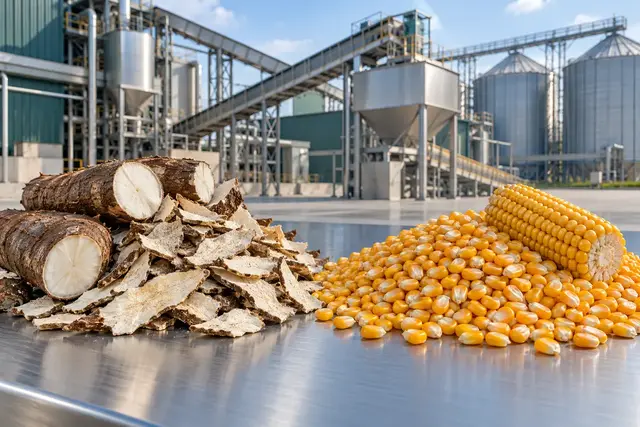
A feedstock conversion changes more than the receiving equipment. Qualify the raw material, front-end duty, fermentation behavior and co-product route together.
Explore ↗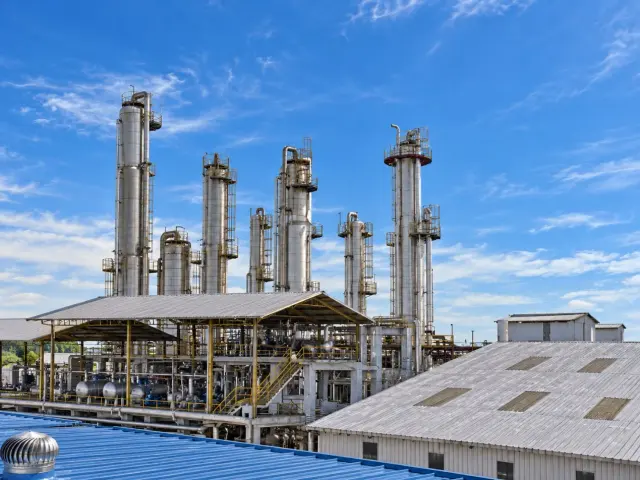
From cassava to corn: CNE integrates process design, new and existing equipment, and on-site commissioning support for PT Indonesia Ethanol Industry.
Explore ↗