
Multi-effect distillation
Separate impurities with purpose. Reuse heat across pressure levels. Select the column arrangement for the product mix and the real feed composition.
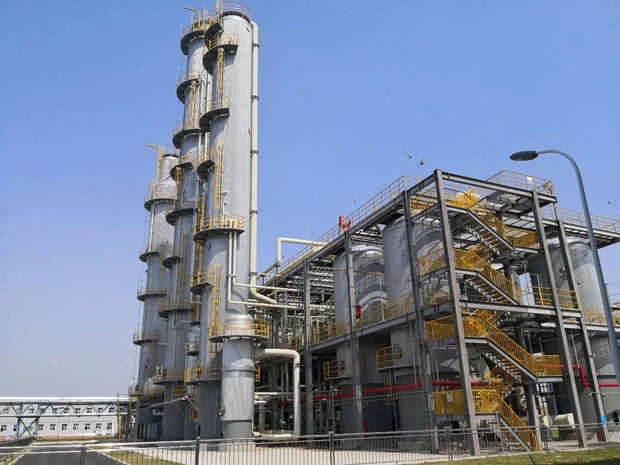
CNE project photography
01 / CNE
Pressure levels create heat-recovery opportunities
Vapor leaving one column can supply useful heat to a lower-temperature process duty. CNE’s multi-effect arrangements combine column pressure selection, reboiler duties and feed preheating. The design must preserve sufficient temperature driving force while managing fouling, control stability and product recovery.
02 / CNE
Select the right refining configuration
Five-column arrangements address high-grade edible alcohol. Six-column systems provide additional separation options for a more demanding impurity schedule. The seven-column configuration brings together stripping, aldehyde removal, combined separation, hydroselection, rectification, methanol removal and recovery functions, with optional molecular-sieve finishing. More columns are not automatically better: the complete separation duty determines the design.
03 / CNE
Read energy figures with their boundaries
Our seven-column process design uses 1.5 t of steam per tonne of product at a stated steam pressure of at least 0.6 MPa. This is a technology reference, not a blanket whole-plant guarantee. Fermentation strength, product split, utilities and cleaning cycles must be fixed before a guaranteed consumption schedule is issued.
Explore the engineering behind the project
CNE / Discuss your project
Your next plant starts with the right conversation.
Share your feedstock, target product and capacity. Let’s shape a practical process concept.