
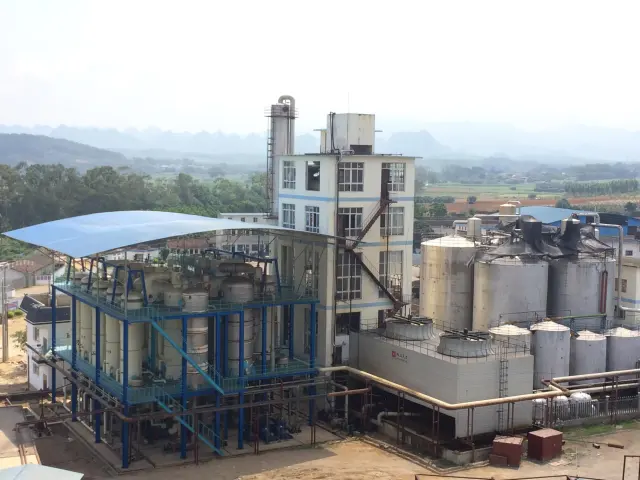

Distillery yellow water & high-strength wastewater
Connect alcohol recovery, concentration and wastewater treatment around the actual stream. Solids, organic load, salts and variability determine whether recovery, evaporation or biological treatment is appropriate. Recovered condensate must be assessed before reuse; concentrate and sludge need defined outlets.
CNE project photography
01 /
Grain stillage and feed products
A grain route typically separates whole stillage into a solids-rich stream and thin stillage. Evaporation concentrates dissolved solids; the selected co-product scheme may sell wet grains or combine solids and syrup for drying. Choose WDG, DDG or DDGS according to buyer requirements, local logistics, storage life and energy cost. Dryer selection requires a moisture balance and emissions review.
02 /
Keep different feedstocks separate in the design
Molasses vinasse is not a grain DDGS stream. Cassava residues also have a different nutritional profile. Treatment can involve concentration, biological treatment or other recovery routes, subject to site conditions. Fermentation CO₂ recovery may be evaluated separately, with gas analysis, purification, liquefaction and an identified product market; it is not included automatically.
Continue exploring
Stillage evaporation & DDGS systems
Coordinate solids separation, thin-stillage evaporation, syrup blending and drying around a defined co-product specification. DDGS is a process system, not a general accessory; a molasses stillage route requires a different residue strategy.
Explore ↗Health, safety & environmental planning
CNE’s project HSE materials address responsibilities, site induction, work permits, inspections and management of change across construction and commissioning.
Explore ↗Your next plant starts with the right conversation.
Share your feedstock, target product and capacity. Let’s shape a practical process concept.
