
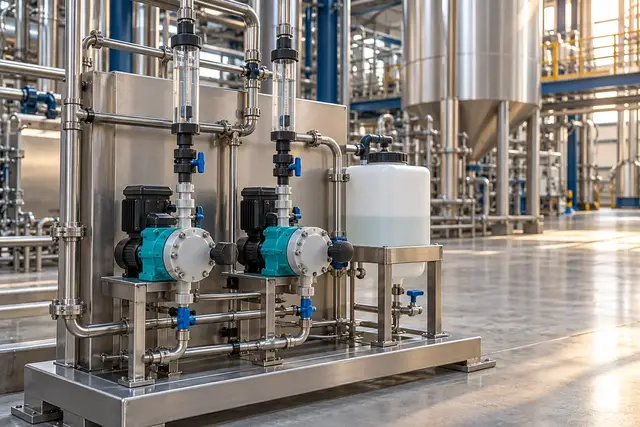
Verify enzyme dosing against real feed throughput
A dosing-pump setting is not a measured enzyme consumption. Reconcile the delivered dose, feed mass and enzyme specification before drawing conclusions about conversion or cost.
Explore ↗The front end sets the conditions for downstream separation. Our cassava front end integrates storage, milling, liquefaction, saccharification and controlled fermentation.
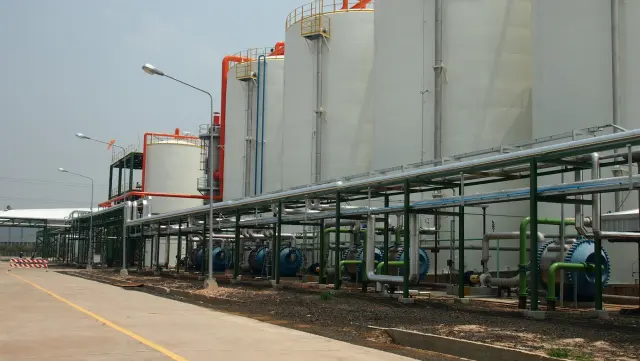
CNE project photography
01 /
Corn, cassava and wheat routes require preparation suited to starch conversion. Molasses and sugar-based feeds require a different front end. Feedstock composition, seasonal variation and handling conditions inform the process design; they also affect the solids and impurities presented to the downstream plant.
02 /
The design aligns fermentation throughput and discharge conditions with the distillation feed requirement. Operating and laboratory information connects raw-material quality, conversion and fermentation performance to final product quality. Training covers the process route, equipment functions, routine observations and the records needed to investigate a deviation.
03 /
Grain and cassava projects need a defined route for the non-ethanol fractions leaving the process. The mass balance identifies stillage, recovered solids, evaporation loads and water-reuse interfaces. These requirements should be resolved together with the production train rather than added after equipment selection.

A dosing-pump setting is not a measured enzyme consumption. Reconcile the delivered dose, feed mass and enzyme specification before drawing conclusions about conversion or cost.
Explore ↗
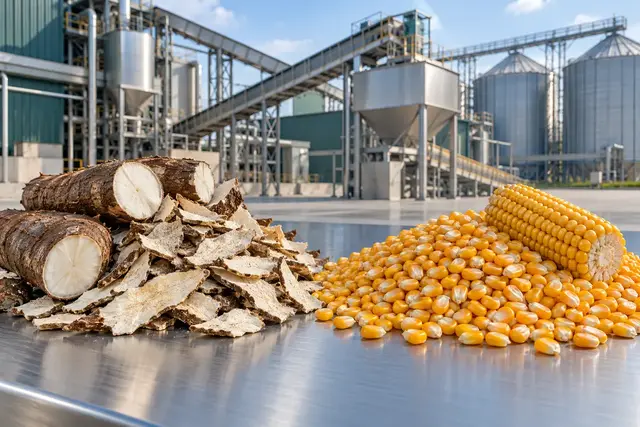
A feedstock conversion changes more than the receiving equipment. Qualify the raw material, front-end duty, fermentation behavior and co-product route together.
Explore ↗

An alcohol specification combines concentration, impurity limits and agreed test methods. Our laboratory approach covers both process checks and finished-product analysis.
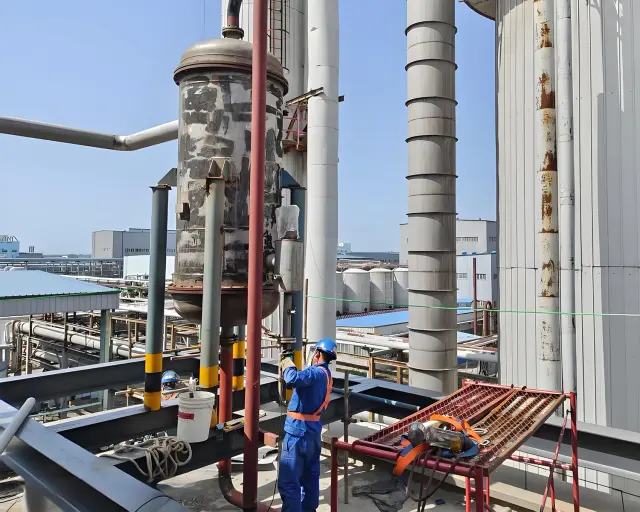
Explore ↗Distillation condensers, fermentation coolers and chillers interact through the utility system. A plant can have enough installed process equipment and still be limited by cooling-water availability.
Explore ↗Share your feedstock, target product and capacity. Let’s shape a practical process concept.
