
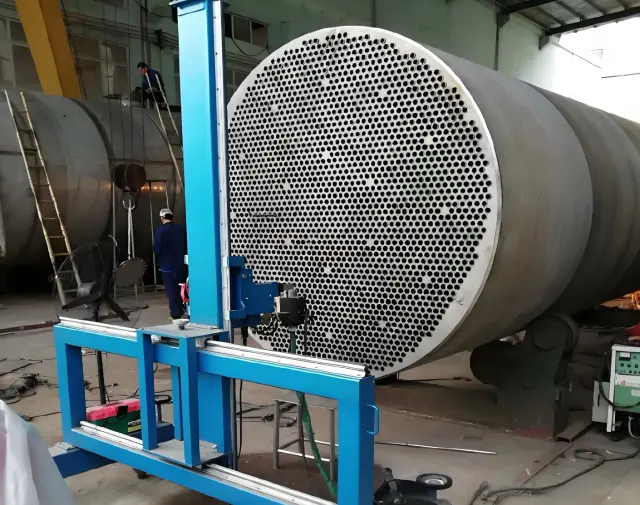
Heat exchangers & thermal interfaces
Reboilers, condensers and process heat exchangers connect the distillation system to the plant’s energy balance.
Explore ↗Distillation condensers, fermentation coolers and chillers interact through the utility system. A plant can have enough installed process equipment and still be limited by cooling-water availability.
CNE — China New Energy · Updated ·
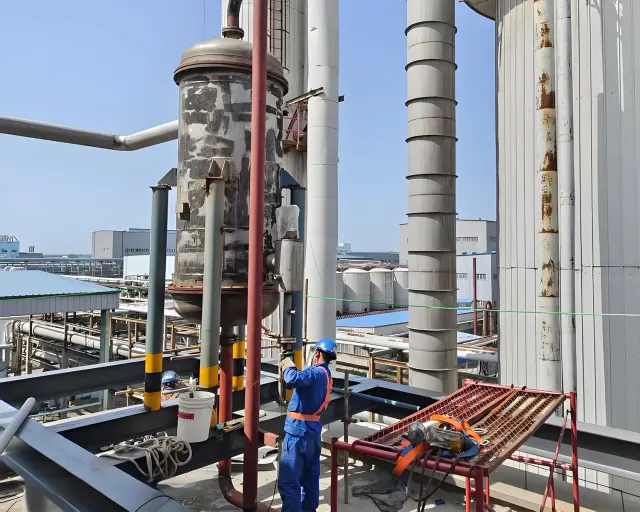
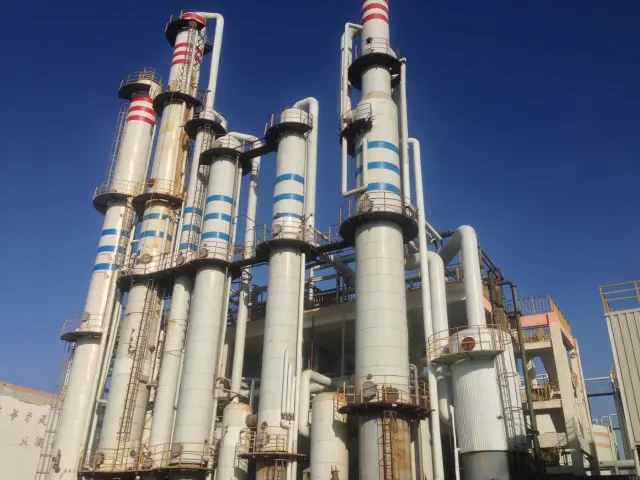
CNE project photography
01 /
Circulating-water flow describes water moving through the cooling loop. Makeup replaces evaporation, drift, blowdown and other losses. These are different quantities. A cooling tower must reject the combined heat load under the site’s design weather conditions; adding pump flow alone does not establish adequate tower capacity.
02 /
List the supply and return temperatures, design flow and pressure requirement of each consumer. Include chiller condenser duty, not only the useful chilled-water load. Prepare operating cases for normal production, peak ambient conditions, start-up and maintenance. Verify which pumps, headers and cells are available in each case.
For an approximate sensible-heat check, heat duty equals mass flow multiplied by heat capacity and temperature rise. With water flow stated in m³/h, a useful screening relation near ordinary cooling-water temperatures is Q(kW) ≈ 1.16 × flow × temperature rise. It does not replace equipment ratings or a detailed water balance.
03 /
Measure temperatures and pressures at consumers, not only at the tower. Check actual pump duty, valve positions, strainers, fouling and hydraulic balance against approved drawings. Water chemistry and treatment influence scale, corrosion and biological fouling. The responsible utility specialist should evaluate treatment and blowdown within the site’s environmental requirements.
04 /
Map every consumer connected to a common cooling-water supply. Check simultaneous heat loads, supply temperature and hydraulic distribution before expanding production. Coordinated utility design helps the distillation system, fermentation cooling and chillers operate together.
05 /
Compare measured heat loads and temperatures with the tower and chiller ratings at the relevant ambient condition. Record instrumentation accuracy and operating mode. An upgrade proposal should identify whether the limiting factor is heat rejection, hydraulic distribution, fouling, controls or available electrical power, and state how the improvement will be verified.
Updated · 2026-10-11
Reboilers, condensers and process heat exchangers connect the distillation system to the plant’s energy balance.
Explore ↗
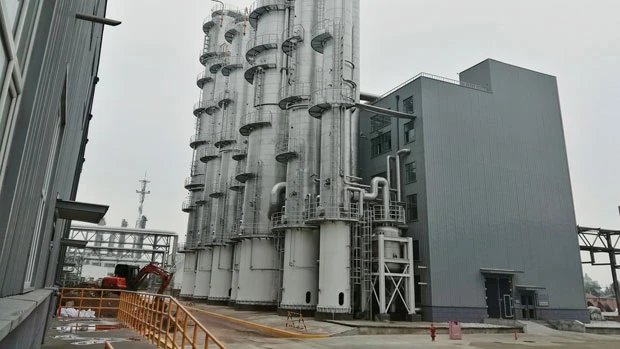
Reduce avoidable heat losses by reviewing the complete energy network before selecting individual equipment.
Explore ↗A low steam number is useful only when the product basis and process boundary are clear. Separate distillation, dehydration and DDGS duties before comparing proposals.
Explore ↗From cassava to corn: CNE integrates process design, new and existing equipment, and on-site commissioning support for PT Indonesia Ethanol Industry.
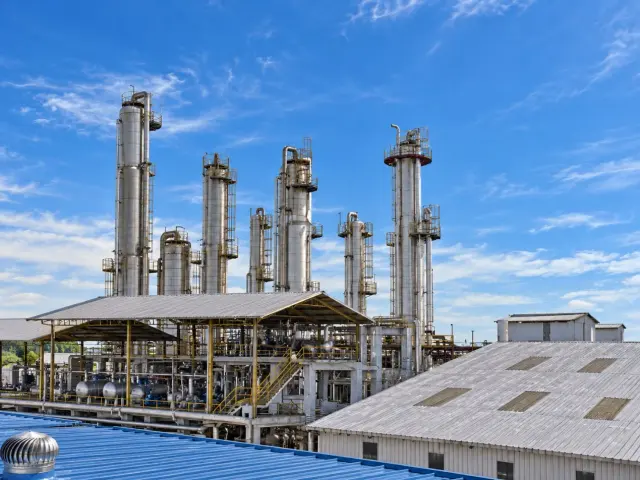
Explore ↗CNE’s reference register contains repeated upgrades to distillation, dehydration, liquefaction and evaporation systems. Start with the bottleneck and define a measurable improvement.
Explore ↗Share your feedstock, target product and capacity. Let’s shape a practical process concept.
