
Stillage, DDGS & co-products
Design the residual streams as part of the plant. Separation, evaporation and drying can be as important to the project as alcohol production.
Explore ↗Coordinate solids separation, thin-stillage evaporation, syrup blending and drying around a defined co-product specification. DDGS is a process system, not a general accessory; a molasses stillage route requires a different residue strategy.

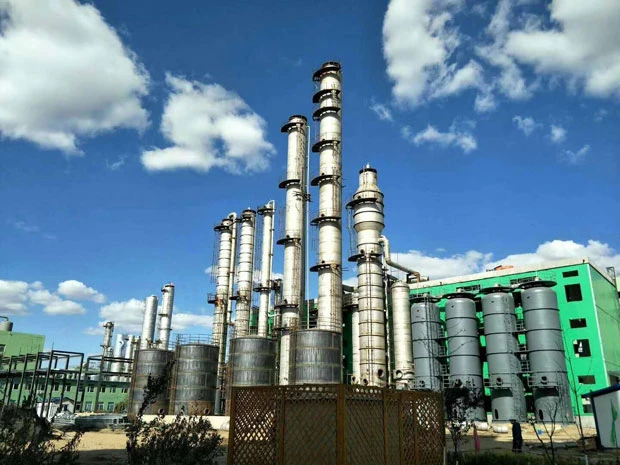
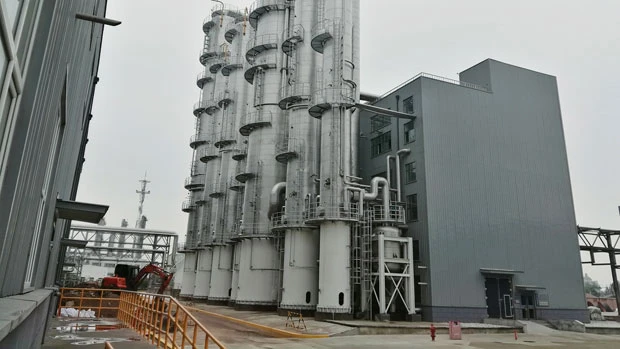
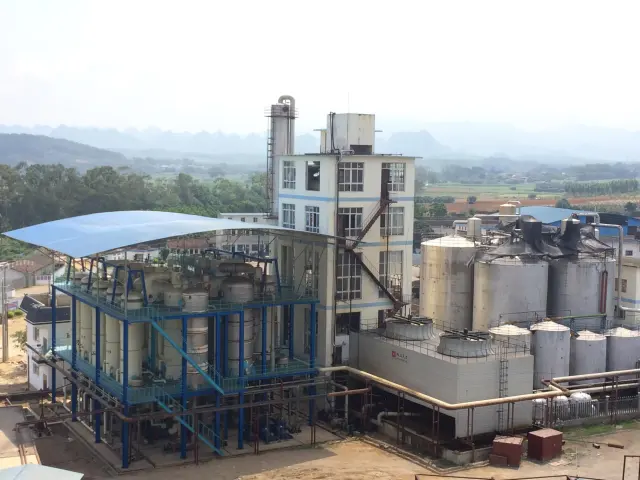
CNE project photography
01 /
Whole stillage first separates into wet solids and thin stillage. Evaporation concentrates the thin stream into syrup; the selected proportion is blended with wet solids before drying to DDGS. A wet-feed route changes the dryer requirement and logistics.
The four-effect falling-film arrangement in the Indonesia design reuses vapor across effects. Its design must address distribution, fouling, clean-in-place access and condensate quality. Dryer exhaust collection and dust control belong in the same engineering discussion.
Set feed-product moisture, composition and storage requirements with the buyer. Close the water and solids balances before quoting dryer capacity. Corn, cassava and molasses residues differ: do not transfer grain protein assumptions or a DDGS route to every feedstock.

Design the residual streams as part of the plant. Separation, evaporation and drying can be as important to the project as alcohol production.
Explore ↗
Reduce avoidable heat losses by reviewing the complete energy network before selecting individual equipment.
Explore ↗A portfolio of distillation, molecular-sieve dehydration and feed-system projects.

Explore ↗The ethanol process leaves valuable solids and dissolved material in the stillage. Product quality and energy demand depend on how those streams are separated, concentrated and dried.
Explore ↗Share your feedstock, target product and capacity. Let’s shape a practical process concept.
