Skip to content
EN ⌄
Discuss your project ↗

Verify enzyme dosing against real feed throughput

A dosing-pump setting is not a measured enzyme consumption. Reconcile the delivered dose, feed mass and enzyme specification before drawing conclusions about conversion or cost.

· Updated ·

Verify enzyme dosing against real feed throughput

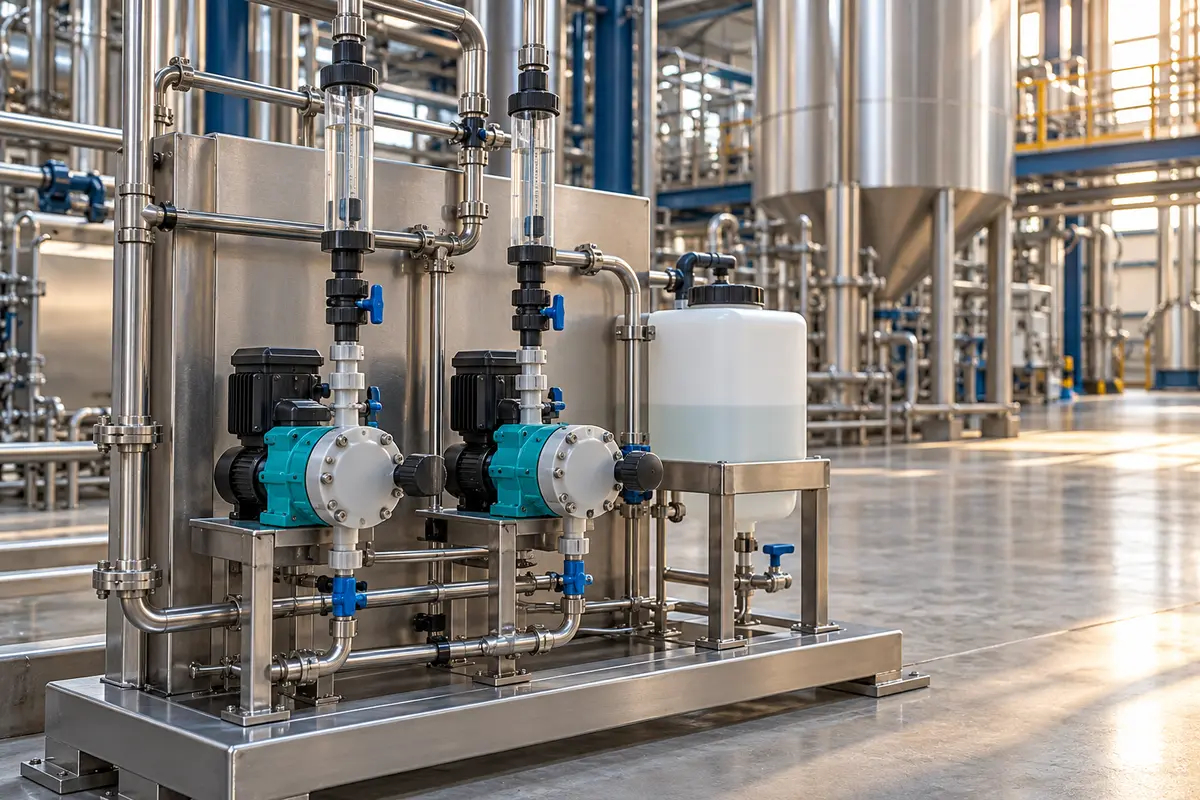
AI · Process illustration — not a site photograph

01 /

Start with a common denominator

State whether the dose is expressed per tonne of wet feed, dry feed or starch, and whether the quantity refers to commercial liquid or active enzyme units. Record feed moisture and starch basis beside the calculation. Two suppliers can specify different activity concentrations; comparing their kilograms alone can give a misleading result.

02 /

Measure the delivered quantity

Use a calibrated mass measurement or a vessel-volume change over a defined period, with the density needed for a volume-to-mass conversion. Account for refill events, dilution, returns and any shared dosing lines. Compare the measured delivery with the feed throughput over the same time window. A pump stroke or speed setting needs a verified calibration curve under its installed conditions.

Dose in kg/t = enzyme mass delivered in kg / feed mass processed in tonnes. For example, 12 kg delivered while processing 40 tonnes corresponds to 0.30 kg/t. This is a calculation example, not a recommended process dose.

03 /

Connect calibration to process evidence

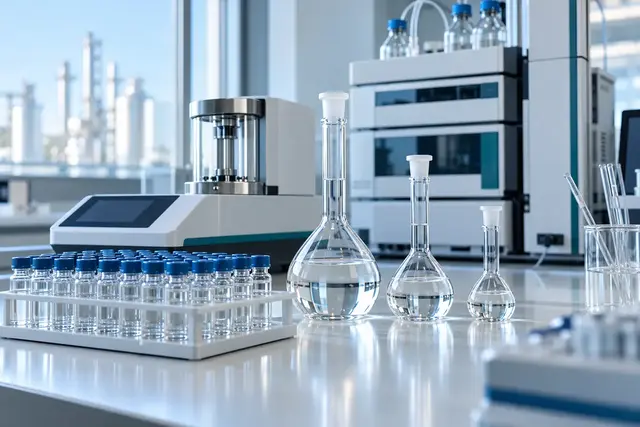
Check pump condition, priming, trapped gas and line restrictions when indicated delivery disagrees with measured usage. Compare conversion and fermentation data using the same sampling times and methods. A laboratory trend is meaningful only when temperature correction, sample preparation and reporting units are consistent. Changes to enzyme selection or dose should follow the supplier’s specification and the site’s approved process-change procedure.

04 /

Coordinate measurement and operator training

Use one approved dosing sheet across operations and the laboratory. Train operators to record tank refills, pump settings, measured delivery and raw-material throughput. A shared calculation basis makes enzyme consumption and conversion results easier to compare.

05 /

What to record

Record enzyme product and batch, declared activity, storage conditions, feed mass and moisture, measured delivery, calibration date, dosing location and the corresponding conversion results. Keep changes in a dated log so a consumption reduction can be assessed together with product yield and fermentation stability.

Updated · 2026-10-11

Your next plant starts with the right conversation.

Share your feedstock, target product and capacity. Let’s shape a practical process concept.

Discuss your project ↗
滚动至顶部